
Liguria is not an easy place to grow grapes. The land is narrow and steep, squeezed between the Alps, the Apennines and the Mediterranean Sea. Vineyards cling to terraced hillsides carved out of rock, often accessible only on foot. Harvesting here is physical work — baskets on shoulders, ropes for balance, no machinery. And yet, from this seemingly impossible landscape, a handful of winemakers produce some of Italy's most distinctive and least-known wines.
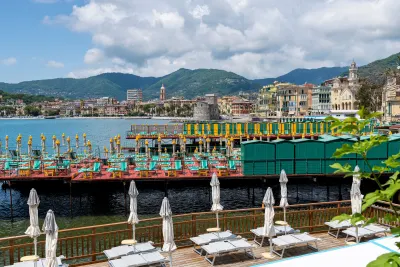
If you've spent time on the Ligurian Riviera — in the Cinque Terre, around Portofino, or along the coast near San Remo — you may have tasted the local white wine with your grilled sea bass and thought little more of it. That would be a mistake. Ligurian wines deserve closer attention.
A Rare and Ancient Heritage
Liguria currently produces 8 DOP wines (Protected Designation of Origin), 4 IGP wines and cultivates over 30 native grape varieties. But the real figure that puts this in perspective is historical: at the beginning of the 20th century, before phylloxera and rural depopulation wiped out most of the vineyards, Liguria counted approximately 600 distinct grape varieties. Today, researchers from the University of Genoa are still combing remote mountain valleys searching for surviving ancient vines.
The wines have a long pedigree. Francesco Petrarca, the 14th-century poet, wrote admiringly about the wines of the Cinque Terre — they were already considered among the finest in Italy, worthy of diplomatic gifts and noble tables. That reputation, largely forgotten in the modern wine world, is slowly being rebuilt by a new generation of small-scale producers.
The Wines You Should Know
A journey through Ligurian wines is best understood as a journey from west to east, from the border with France down to the Gulf of La Spezia. Each zone has its own identity.
- Rossese di Dolceacqua DOC — Produced in the hills around Dolceacqua, a medieval village in the Nervia Valley near the French border, Rossese was the first Ligurian wine to receive DOC status in 1972. It's an elegant red with a vivid ruby colour, aromas of wild red berries and violet, and smooth, silky tannins. Food pairing: lamb chops, herb-roasted rabbit, aged cheeses from the local valleys. Napoleon Bonaparte, who knew this corner of Liguria well, was reportedly a fan.
- Ormeasco di Pornassio DOC — Made from the Dolcetto grape grown in the Alta Valle Arroscia in the Imperia hinterland, Ormeasco comes in three styles: a structured rosso superiore suited to ageing; a fresh, dry rosé called sciac-trà (from the local dialect, referring to brief skin maceration); and a concentrated, amber-hued passito. The sciac-trà is the most original of the three — pale salmon in colour, light and food-friendly. Food pairing: the rosso superiore with beef stew and mushrooms; the sciac-trà with charcuterie and fresh cheeses.
- Pigato DOC (Riviera Ligure di Ponente) — Grown on the plain around Albenga in the Savona province, Pigato is one of Liguria's most important white wines. Its origins are thought to be Greek — the name may derive from the Greek pegatòs, meaning "spotted," a reference to the golden flecks on the grape's skin. It's intensely aromatic — white flowers, peach, Mediterranean herbs — with a mineral salinity that makes it exceptional with seafood. Food pairing: salt cod in Ligurian style (brandacujun), fried anchovies, grilled sea bream. A natural match for the region's cooking.
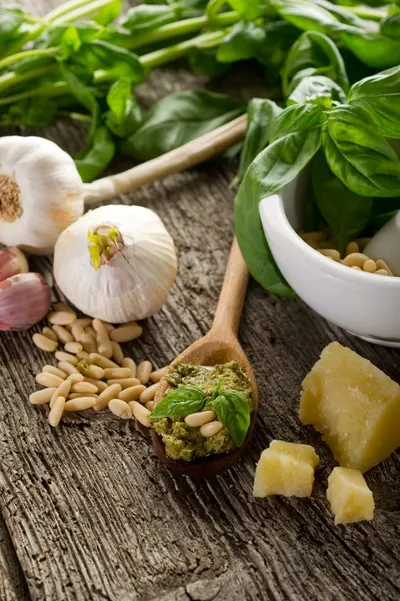
- Vermentino DOC (Riviera Ligure di Ponente — Diano Castello) — Widely grown along the entire Ligurian coast, Vermentino reaches its most refined expression around Diano Castello, a small hillside village above Diano Marina. Floral, with stone-fruit notes and a slightly bitter almond finish typical of the variety, it's the go-to white for the local table. Food pairing: pesto pasta (the classic), seafood risotto, steamed mussels with white wine. Order a bottle of Vermentino when you sit down to any Ligurian meal and you won't go wrong.
- Sciacchetrà DOC Cinque Terre — This is the wine people talk about in hushed tones. Made from late-harvested Bosco, Albarola and Vermentino grapes, dried on wooden racks for months before pressing, Sciacchetrà is a meditation wine of extraordinary complexity. Sweet or nearly dry depending on the style, it carries aromas of dried apricot, figs, honey, caramel and a salt-iodine note that speaks unmistakably of the sea. Production is extremely limited — a few thousand bottles in a good year — and prices reflect the labour involved. If you find it offered by the glass at a Cinque Terre cantina, order it without hesitation. Food pairing: strong blue cheeses, dark chocolate, almond pastries, or simply on its own as the sun sets over the sea.
A Wine Route from West to East
The Ligurian wine route naturally follows the curve of the coast. From Dolceacqua in the far west — with its Doria castle and narrow stone lanes — the route moves east through the Arroscia Valley for Ormeasco, then down to the fertile plain of Albenga for Pigato, up to Diano Castello for Vermentino, and finally to Monterosso al Mare at the western edge of the Cinque Terre, where the terraced vineyards produce the legendary Sciacchetrà. All five stops are accessible by car from the motorway — a full circuit can be done in two days, more comfortably in three.
Where to Buy Ligurian Wines
Outside Liguria, these wines are almost impossible to find — production volumes are too small for mainstream distribution. The best approach is to buy direct from the estates during your visit. For online purchases, the Enoteca Regionale della Liguria (enotecaragionaleliguria.it) lists certified producers and ships across Italy. In Genoa, the historic wine bars and delis around the Mercato Orientale and the old port often stock a wider selection than you'd expect.
The wines of Liguria are not trying to compete with Barolo or Brunello. They are wines of place — honest, specific, shaped by a landscape that demands effort from everyone who works it. Tasting them here, at the source, with a plate of fresh anchovies or a hand-rolled trofie pasta, is one of those travel experiences that stays with you long after you've left.
Stay on the Ligurian Riviera with CasaViva
Planning your trip? CasaViva offers hand-picked apartments in Camogli, Rapallo, Santa Margherita Ligure and Genoa. Book directly — best rates guaranteed, no commission fees.
Browse available apartments →